DESIGNA Investor Prospectus
An infrastructure platform built for commercial expansion.
DESIGNA is commercializing an independent AI and computing platform built around its proprietary PHP-WASM kernel. Its initial channels include developer subscriptions, managed infrastructure, enterprise licensing, implementation, AI/compute usage and strategic or OEM licensing.
The company has built substantial underlying technology. The next phase funds customer acquisition, commercial leadership, onboarding and deployment capacity while continuing product validation and development.
DESIGNA is capital efficient by design. Spending and team growth are intended to follow customer milestones and available capital, with a long-term objective of independence and an eventual IPO.
CURRENT FINANCING
Current financing target: up to $2 million total from accredited investors. Proposed terms remain $4 per share at a $50 million pre-money valuation, subject to definitive financing documents.
THE BUSINESS: AI AND COMPUTING INFRASTRUCTURE
DESIGNA’s commercial approach is industry-by-industry transformation through forward-deployed engineering. Engineers work with customers to adapt the software, connect existing systems, and validate it in the environment where it must deliver.
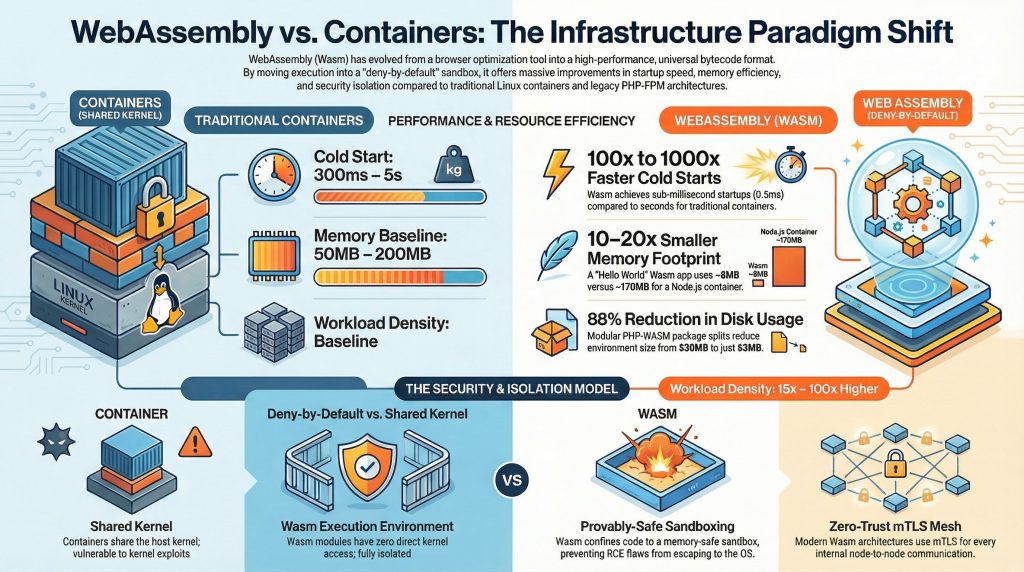
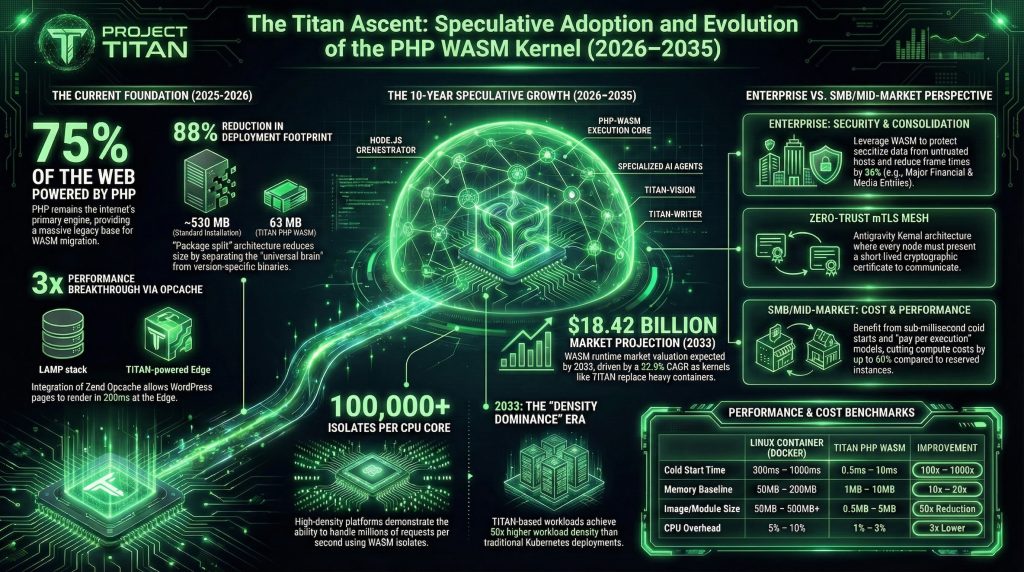
DESIGNA builds the Antigravity Kernel, a PHP/WebAssembly runtime. Titan adds AI chat, task planning, and application monitoring. WordPress+ packages this work as managed hosting.
The commercial thesis combines recurring hosting revenue with implementation and technical leadership fees. DESIGNA works in partnership with Google, AMD, and NVIDIA. The opportunity is to turn its engineering into repeatable services for agencies, retailers, and enterprise IT buyers.
DESIGNA IN MOTION
A concise look at the operating philosophy behind DESIGNA. The commercial begins muted; use the player controls when you want sound.
WHAT DESIGNA HAS BUILT
Founder Andrew Rulnick is the solo architect of the Titan Antigravity Kernel. He directed AI-assisted implementation and resolved integration failures across cloud networking, certificates, runtimes, databases, and customer permissions. DESIGNA operates its public website on that software. The build includes customer isolation, domain onboarding, payment-key separation, monitoring, and guarded releases.
- PHP/WebAssembly runtime: The Antigravity Kernel runs PHP applications. WordPress compatibility is tested against the applications and plugins selected for deployment.
- Performance engineering: The next benchmarks will compare request latency, memory use, and capacity under defined loads. Reproducible results will identify the applications where the runtime offers an advantage.
- Titan: Chat, planning, document retrieval, and task records connect AI assistance to application work. Access controls determine which actions and data a customer can use.
- Release controls: Readiness checks cover access, billing, monitoring, and promotion. Each deployment receives a validation record for its selected applications and requirements.
CUSTOMERS AND REVENUE
DESIGNA’s business model combines hosting subscriptions, implementation projects, and ongoing technical or marketing leadership. Each offer connects software with a specific buyer and deliverable. Financial diligence should examine contracts, revenue, and delivery costs separately.
- WordPress+: Managed hosting for agencies, WordPress developers, and online retailers. Recurring fees depend on the selected service and resources.
- Forward-deployed engineering: Implementation fees support industry-specific work: agency publishing, retail transactions, enterprise integrations, and government application pilots.
- Titan: AI-assisted application work is part of the product strategy. Usage costs and access must be defined for each offer.
- Interactive media: Independent R&D has produced a prototype combining image generation, upscaling, speech recognition, OCR, and GPU computation. Game-asset remastering experiments inform the broader interactive-media work. Commercial products remain in development.
WHAT THE EVIDENCE CAN SHOW
DESIGNA maintains tests for enrollment, billing, customer access, custom domains, data retrieval, monitoring, and releases. Diligence should examine dated results and unresolved failures alongside the running product.
The next demonstrations will measure customer-scale reliability and operating costs. Each result should identify the application, load, software version, and recovery procedure so a buyer can judge its relevance.
- Working software: The public site demonstrates WordPress delivery. Titan and customer-management functions can be evaluated through a scoped product demonstration.
- Product review: Inspect enrollment, billing, chat, planning, monitoring, and access controls.
- Release review: Check the validation record and rollback procedure for the proposed installation.
THE ECONOMICS TO PROVE
Growth depends on converting deployments into recurring revenue. Customer acquisition cost, retention, hosting cost, support hours, and gross margin will measure the strength of the business as it expands.
- For customers: Compare migration effort, compatibility, support, and total cost against the current host and service providers.
- For DESIGNA: Measure whether repeatable setup and maintenance reduce the cost of serving each account.
- For partners: Evaluate a defined hosting or implementation offer against the needs of an existing client base.
THE NEXT DECADE: SOFTWARE, DATA CENTERS, AND ORBITAL COMPUTE
DESIGNA’s ambition extends from distributing the kernel to building the facilities that run it. The sequence starts with software and customers. Later stages require substantial capital investment, specialist partners, and successful engineering milestones.
- Distribute the kernel: Package the runtime for developers and commercial deployments. Publish reproducible performance comparisons.
- Build consumer products: Turn application tools and interactive-media projects into products people can use directly.
- Expand into data centers: Adapt the software for larger compute installations. Measure reliability, resource use, and operating economics.
- Design and build data centers: Develop facilities around the computing requirements. Capital, energy, location, and construction partners will shape each project.
- Pursue orbital compute: Explore small compute clusters launched on small rockets. The concept uses satellites powered by solar panels, with sails forming part of the spacecraft design. Hardware, communications, thermal management, launch partners, and funding require dedicated development.
LEADERSHIP
Andrew Rulnick founded DESIGNA in 2013. The company achieved 30% year-over-year client growth and earned Google Premier Partner recognition. Across GoDaddy through Horizon, his technical innovation and product creation contributed to more than $100 million in revenue. He improved media mix modeling efficiency by 20% and managed the Google partnership. His executive experience includes more than $50 million in P&L responsibility. These prior-company achievements complement his solo systems build and independent GPU research. These prior-career figures are separate from DESIGNA’s current platform revenue.
IMPORTANT NOTICE AND INVESTOR DISCLAIMER
This material is provided for confidential informational purposes only. It is not an offer to sell, a solicitation of an offer to buy, or a recommendation to purchase any security, token, note, membership interest, or other investment product. Any offer or sale of securities, if undertaken, would be made only through definitive offering documents, subscription materials, and related agreements provided to qualified investors in accordance with applicable securities laws.
This prospectus-style overview may contain forward-looking statements, projections, targets, roadmap items, market estimates, technical goals, and other statements about future events or future performance. These statements are based on current assumptions and expectations and are subject to substantial risks, uncertainties, dependencies, and changes in circumstances. Actual results may differ materially from those expressed or implied.
Performance claims, cost-savings estimates, valuation scenarios, market-size references, security descriptions, and technical roadmap items are illustrative unless accompanied by specific benchmark artifacts, customer contracts, audited financials, or executed commercial agreements. DESIGNA makes no representation that any target, projection, milestone, financing outcome, customer adoption curve, or liquidity event will be achieved.
No representation or warranty, express or implied, is made as to the accuracy or completeness of this material. Recipients should conduct their own independent diligence and consult their legal, tax, technical, accounting, and financial advisors before making any investment or commercial decision. Past performance, founder experience, prototype performance, internal testing, or early product traction is not necessarily indicative of future results.
This material is not intended for public distribution and may include confidential, proprietary, or trade-secret information. By reviewing it, the recipient agrees not to copy, distribute, publish, or rely on it as a substitute for definitive transaction documents or professional advice.